Case Summary
- Case Type
- Homicide
- Incident Date
- May 1, 2022
- Location
- Lake Mead, Las Vegas area, Nevada
- Investigating Agency
- Las Vegas Metropolitan Police Department
- Victim Count
- 1
- Arrest Status
- Unsolved
- Case Status
- Under investigation
Authorities in Clark County, Nevada, have identified human remains found inside a corroded barrel at Lake Mead in May 2022 as those of Edward Lelburian Jackson, a homicide victim killed by a gunshot wound in the early 1980s.
The announcement was made by Clark County Coroner Melanie Rouse and the Las Vegas Metropolitan Police Department following advanced forensic genealogical testing. Investigators are now appealing to the public for information regarding Jackson's life, travels, and associations to help identify who committed the murder four decades ago.
Incident Overview
On May 1, 2022, visitors at Lake Mead discovered human remains encased inside a severely deteriorated 50-gallon metal drum along the receding shoreline of the reservoir, located a short drive from Las Vegas. The discovery occurred when a witness investigated screams heard near the water and spotted the drum containing human bones along with visible remnants of clothing, including a shirt and belt.
Following the recovery of the remains, forensic examination conducted by the Clark County Coroner's Office determined that the decedent died from a single gunshot wound to the head and ruled the death a homicide. Detectives with the Las Vegas Metropolitan Police Department established that the killing likely occurred in the early 1980s based on clothing styles and preliminary investigative leads. Despite persistent speculation linking the barrel killing to historical organized crime operations in nearby Las Vegas, homicide detectives emphasized that current investigative findings do not support any connection to mob activity.
Timeline of Events
- Early 1980s: Investigators estimate Edward Lelburian Jackson was shot in the head and killed, with his body hidden inside a 50-gallon drum and submerged in Lake Mead.
- May 1, 2022: Dropping water levels at Lake Mead expose the deteriorated metal drum containing Jackson's remains, which are spotted by lake visitors and reported to authorities.
- 2022 to 2026: Forensic examiners and genealogy experts work to extract and analyze DNA samples from the recovered remains.
- 2026: Oklahoma State University laboratory technicians develop a genetic lead, enabling investigators to send a DNA testing packet to a potential relative.
- October 2026: DNA results confirm the match, leading Coroner Melanie Rouse and homicide detectives to publicly reveal Jackson's identity and request tips from the public.
Victim Information
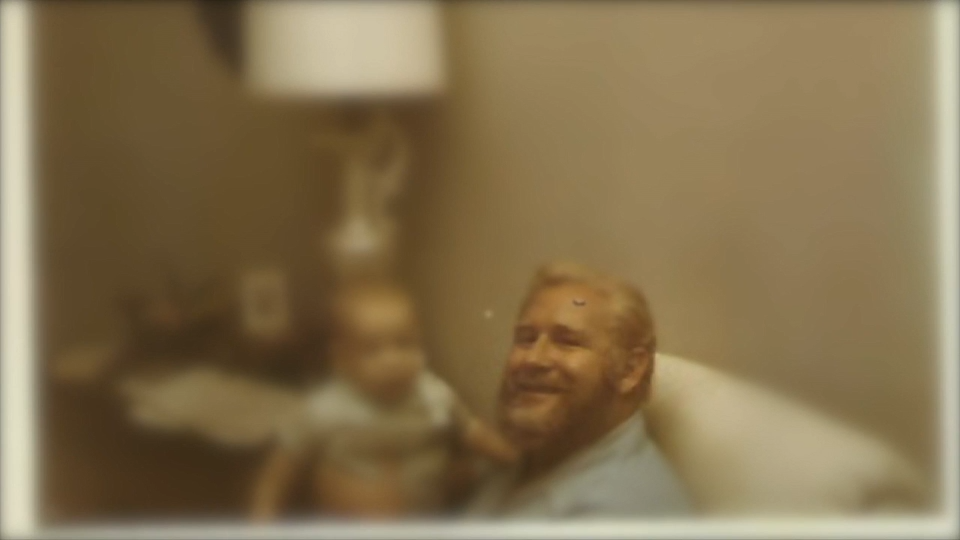
The victim has been identified as Edward Lelburian Jackson, who also went by the nickname "Buddy." At the time of his death in the early 1980s, Jackson was in his mid- to late 50s. Official records indicate that Jackson was originally from Arkansas, lived in Los Angeles, and was married in the early 1970s, though he had no known children.
According to police, Jackson had no established permanent connection or known residence in Las Vegas, but he traveled frequently across the United States. Court records show Jackson had a prior criminal history in Utah during the early 1980s involving charges of aggravated arson and conspiracy involving fraud. Homicide detectives noted that extended family members had only limited contact with Jackson, describing him simply as "Uncle Buddy" without knowledge of his employment history or day-to-day life.
Police Response
Upon receiving reports of human remains at Lake Mead on May 1, 2022, law enforcement personnel and scene investigators responded to the shoreline to secure the area and extract the submerged metal container. The Clark County Coroner's Office took custody of the remains to conduct forensic autopsies, while the Las Vegas Metropolitan Police Department Homicide Section initiated a cold case murder investigation to determine the victim's identity and circumstances surrounding his death.
Investigation
The investigation into Jackson's homicide relies heavily on forensic genetic genealogy, a methodology that compares unidentified DNA samples against public and private genealogical databases to construct family trees. After initial testing faced challenges due to the degraded state of the remains, testing responsibilities were assumed by specialists at Oklahoma State University. Laboratory researchers successfully generated a viable DNA profile that pointed toward specific family lines, leading to a direct DNA reference sample from a surviving relative that confirmed the positive identification.
Las Vegas Metropolitan Police homicide detectives have interviewed several distant relatives of Jackson. However, because those family members had minimal contact with him before his disappearance, law enforcement is actively seeking input from former associates, friends, or acquaintances who remember Jackson from the late 1970s and early 1980s.
Evidence Collected
- A heavily corroded 50-gallon metal drum used to conceal the body.
- Skeletal remains bearing a single gunshot wound to the skull.
- Preserved clothing fragments, including a shirt and a belt, recovered from inside the container.
- Forensic DNA profiles extracted and analyzed by Oklahoma State University.
- Historical court records from Utah dating to the early 1980s detailing charges of aggravated arson and conspiracy involving fraud.
Charges Filed
No charges have been filed in connection with the murder of Edward Lelburian Jackson, as the perpetrator or perpetrators remain unidentified. In criminal law, when a homicide case remains unsolved, law enforcement agencies maintain an open cold case file. The statutory framework governing violent crimes like homicide in Nevada outlines specific procedural mechanisms regarding criminal charges once a suspect is identified:
- First Degree Murder: Under Nevada law, first degree murder encompasses deliberate, willful, and premeditated killings, as well as murders committed during the commission of certain felony offenses. A conviction for first degree murder carries severe penalties, including life imprisonment without the possibility of parole or life imprisonment with parole eligibility after a minimum service term.
- Second Degree Murder: Second degree murder applies to intentional killings that lack premeditation or deliberation, as well as deaths resulting from reckless conduct demonstrating a depraved indifference to human life. It carries substantial prison sentences, typically ranging from ten years to life imprisonment.
- Conspiracy to Commit Murder: If multiple individuals conspired to execute the killing or transport and conceal the victim's body in Lake Mead, prosecutors may file conspiracy charges, which constitute separate felony counts under state law.
- Accessory After the Fact / Destruction of Evidence: Individuals who knowingly assisted in concealing the crime, disposing of the body inside the drum, or suppressing evidence may face felony charges related to accessory liability or tampering with evidence.
Court Information
Because no suspect has been taken into custody or formally charged, no court proceedings or docket numbers have been assigned to this homicide case. Any future criminal prosecution arising from this investigation would fall under the jurisdiction of the Eighth Judicial District Court of Nevada, located in Clark County.
In standard criminal court proceedings in Nevada, once a suspect is apprehended in an unsolved homicide, the case initiates with an initial appearance and arraignment before a justice of the peace. During arraignment, the court formally presents the criminal complaint, advises the defendant of constitutional rights, and makes determinations regarding bail or pre-trial detention. A preliminary hearing is subsequently scheduled to evaluate whether probable cause exists to bind the defendant over to the district court for trial, unless prosecutors choose to secure an indictment through a Clark County grand jury.
Statements from Authorities
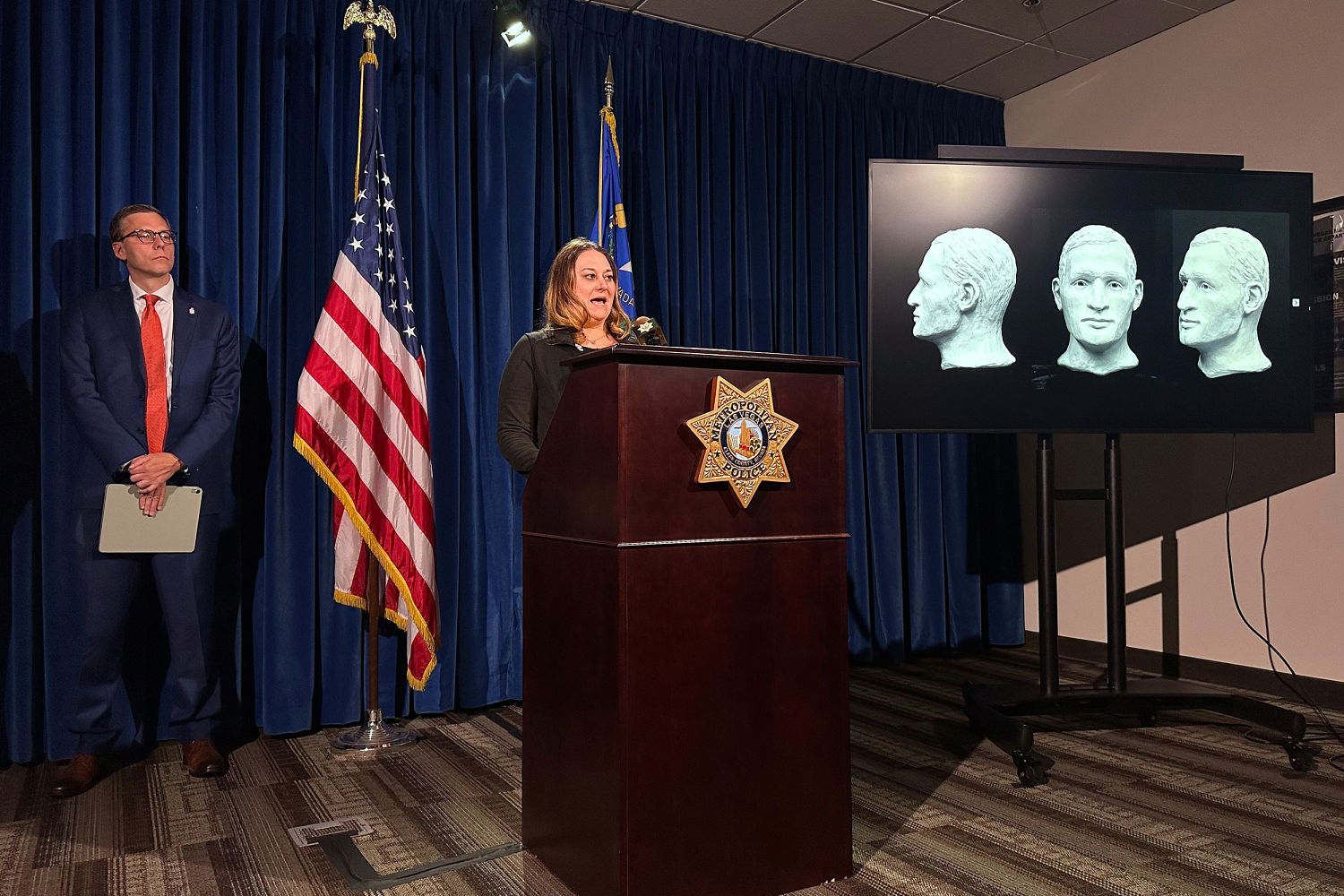
During a press conference announcing the victim's identification, Clark County Coroner Melanie Rouse explained the forensic breakthrough that led to the resolution of Jackson's identity.
Melanie Rouse stated that Oklahoma State University took over genetic testing and developed a strong lead, leading to a DNA match from a relative.
Las Vegas Metropolitan Police homicide Lt. Robert Price addressed public speculation surrounding potential mob involvement and stressed the open nature of the investigation.
Robert Price stated that at this point in the investigation, police do not have any information to support theories linking the crime to organized crime. Price noted that Jackson had no known connection to Las Vegas and no record of gambling, but emphasized that the case remains active.
Robert Price said, "It's an unsolved case. It'll never be closed until we solve it. It's a piece of the puzzle." Price urged anyone with information regarding Jackson's background or past relationships to come forward to assist homicide detectives.
Public Safety Information
Members of the public who possess any information regarding Edward Lelburian Jackson, his movements in the early 1980s, or individuals associated with him are strongly encouraged to contact the Las Vegas Metropolitan Police Department Homicide Section or submit an anonymous tip through Crime Stoppers. Anyone reporting urgent public safety concerns or active criminal activity should dial 911 immediately.
What Happens Next
Homicide detectives with the Las Vegas Metropolitan Police Department will continue tracing Edward Lelburian Jackson's historical movements, criminal records, and personal background across Arkansas, California, Utah, and Nevada. Forensic teams will analyze historical evidence for potential secondary physical or digital leads. If investigative efforts yield a suspect, law enforcement will submit the evidence to the Clark County District Attorney's Office to evaluate criminal charges, seek an arrest warrant, and initiate formal judicial proceedings.