Case Summary
- Case Type
- Homicide
- Location
- Lake Mead, Las Vegas, NV
- Investigating Agency
- Clark County Coroner's Office
- Victim Count
- 1
- Case Status
- Unsolved / Open Investigation
Authorities in Nevada have officially identified the human remains discovered inside a rusted barrel along the receding shoreline of Lake Mead as Edward Lelburian Jackson, an Arkansas resident whose decades-old gunshot homicide has remained an unsolved cold case mystery.
The identification was confirmed by the Clark County Coroner's Office following extensive forensic analysis. Officials confirmed that Jackson was in his mid- to late 50s at the time of his death, which occurred under suspicious circumstances involving a fatal gunshot wound to the head prior to his body being concealed inside the container.
Incident Overview
The homicide investigation began after a rusted barrel containing human remains was exposed on the newly revealed shoreline of Lake Mead as water levels in the reservoir dropped significantly. Investigators examining the scene discovered that the victim had suffered a gunshot wound to the head before being placed inside the container and submerged in the lake decades ago. The discovery prompted a multi-agency forensic effort to identify the victim and determine the timeline and circumstances surrounding the death.
Despite persistent public speculation linking the discovery to historical organized crime operations in neighboring Las Vegas, law enforcement officials noted that no direct physical or documentary evidence currently links Jackson's murder to mob activity. However, homicide detectives and forensic experts have not ruled out any potential theories, noting that the method of body disposal bears distinct structural similarities to historical organized crime homicides in the region.
Victim Information
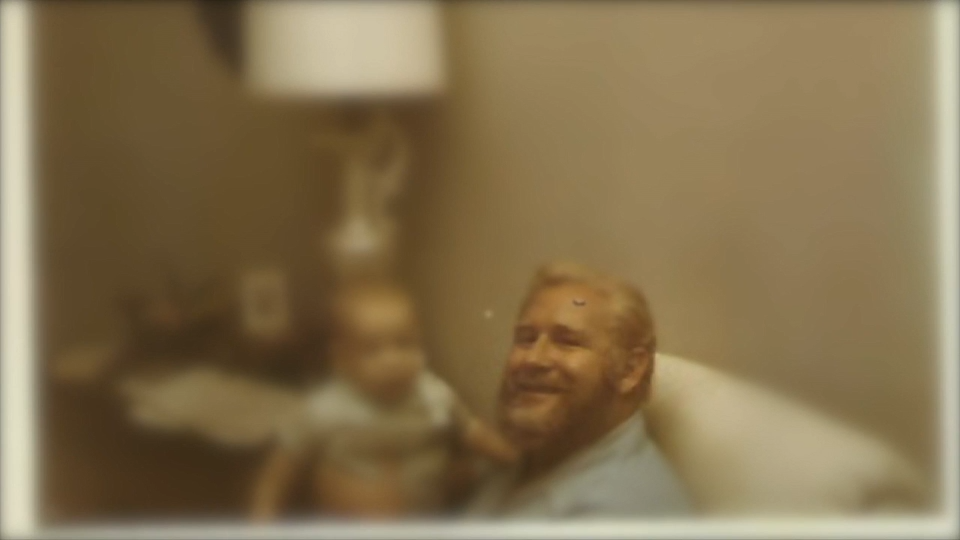
The victim has been identified as Edward Lelburian Jackson, a man originally from Arkansas who was in his mid- to late 50s at the time of his death. Forensic scientists and medical examiners successfully established his identity using advanced genetic analysis derived from a bone sample, coupled with facial reconstructions and distinct articles of clothing recovered with the remains. Authorities continue to seek information from members of the public who may have known Jackson or possess historical knowledge regarding his activities prior to his disappearance and death.
Investigation
The identification of the remains marked a significant breakthrough achieved through modern forensic technology. The Clark County Coroner's Office worked alongside forensic geneticists to extract viable DNA from a bone sample taken from the remains. That genetic material was submitted for advanced genealogy profiling, a process that compares extracted DNA against public and commercial genealogical databases to locate potential relatives. Homicide investigators combined the genetic findings with three-dimensional composite facial renderings and physical examinations of the clothing Jackson was wearing when he died to confirm his identity conclusively.
Evidence Collected
Investigators recovered several key physical items during the retrieval and forensic examination of the site, including:
- A rusted metal barrel used to conceal and submerge the body along the Lake Mead shoreline.
- Human skeletal remains bearing clear evidence of a fatal gunshot wound to the head.
- A bone sample successfully utilized by forensic technicians for advanced DNA extraction and genealogical profiling.
- Articles of clothing worn by the victim at the time of his death, which aided investigators in corroborating physical characteristics.
- Three-dimensional composite facial illustrations generated by forensic artists to aid in public identification efforts.
Charges Filed
No individual has been formally charged in connection with the murder of Edward Lelburian Jackson, as the case remains an active and unsolved cold case homicide investigation. However, under Nevada statutory law, an individual apprehended and prosecuted in connection with this crime could face several potential criminal charges depending on the findings of law enforcement, including:
- First-Degree Murder (NRS 200.010 and NRS 200.030): In Nevada, first-degree murder includes all willful, deliberate, and premeditated killings, as well as killings committed by specific treacherous means such as poison, lying in wait, or torture. First-degree murder is classified as a Category A felony, which represents the most severe criminal offense under state law. A conviction for first-degree murder in Nevada carries potential sentences including life imprisonment without the possibility of parole, life imprisonment with the possibility of parole after serving a minimum of 20 years, or a definite sentence of 50 years with parole eligibility after 20 years.
- Second-Degree Murder (NRS 200.010 and NRS 200.030): Second-degree murder encompasses all other intentional homicides that lack explicit premeditation or deliberation, as well as killings resulting from extremely reckless behavior demonstrating an abandoned and malignant heart. Second-degree murder is also categorized as a Category A felony in Nevada. Individuals convicted of second-degree murder face penalties ranging from life imprisonment with parole eligibility after 10 years to a fixed term of 25 years with parole eligibility after 10 years.
- Voluntary Manslaughter (NRS 200.050 and NRS 200.060): Voluntary manslaughter involves the unlawful killing of a human being without malice or premeditation, upon a sudden heat of passion caused by provocation sufficient to excite an irresistible passion in a reasonable person. In Nevada, voluntary manslaughter is classified as a Category B felony. Penalties for a Category B felony conviction for voluntary manslaughter range from a minimum of 1 year to a maximum of 10 years in state prison, alongside potential court fines.
- Involuntary Manslaughter (NRS 200.070): Involuntary manslaughter consists of an unintentional killing that occurs during the commission of an unlawful act not amounting to a felony, or during the performance of a lawful act without due caution or circumspection. Nevada classifies involuntary manslaughter as a Category D felony, carrying a statutory prison sentence ranging from 1 year to 4 years and potential fines up to $5,000.
- Concealment of Evidence / Destroying Evidence (NRS 199.220): Unlawfully concealing, destroying, or altering physical evidence with the intent to obscure a criminal investigation or prevent the discovery of a crime constitutes a gross misdemeanor or felony under Nevada law, depending on the specific circumstances and intent. Actions involving the placement of a homicide victim in a sealed barrel and submerging it in a body of water constitute deliberate concealment designed to evade law enforcement detection.
Court Information
Because no suspect has been arrested or indicted, no active criminal court case or docket number has been established in the judicial system. If an arrest is made in connection with the death of Edward Lelburian Jackson, prosecution would fall under the jurisdiction of the Eighth Judicial District Court of Nevada, located in Clark County. Under Nevada criminal procedure, serious felony cases involving homicide typically begin with an initial appearance and preliminary hearing in a local Justice Court, such as the Las Vegas Justice Court, to determine whether probable cause exists to hold the defendant for trial. Alternatively, prosecutors may present evidence directly to a Clark County Grand Jury to seek a formal indictment.
It is important to note that under Nevada Law (NRS 171.080), there is no statute of limitations for the crime of murder. Prosecutors maintain the legal authority to file first-degree or second-degree murder charges regardless of how many decades have elapsed since the offense occurred, ensuring that cold case investigations remain legally actionable whenever new evidence or suspect identifications emerge.
Statements from Authorities
Official statements regarding the identification were released by Clark County Coroner Melanie Rouse, who confirmed that the victim was identified as Edward Lelburian Jackson of Arkansas. Rouse detailed that Jackson was in his mid- to late 50s when he died and explained that identification was achieved using advanced bone sample genealogy profiling, combined with three distinct facial composite angles and clothing recovered with the remains.
Las Vegas Metropolitan Police Department homicide detectives stated that while public speculation has frequently tied Lake Mead barrel discoveries to historical organized crime activity in Las Vegas, there is no direct evidence specifically linking Jackson's death to the mob, though investigators have not ruled out any potential connections or motives. Authorities emphasized that police are actively seeking individuals who may have information to help solve Jackson's killing.
Public Safety Information
Members of the public who possessed personal acquaintance with Edward Lelburian Jackson, or who hold historical information concerning his travel, associates, or activities prior to his death, are urged to contact local law enforcement authorities. Individuals wishing to report confidential information regarding unsolved homicides or violent crimes can contact the Las Vegas Metropolitan Police Department Homicide Section or reach out nationally to federal investigative resources. Tips can also be submitted anonymously to Crime Stoppers. For general public safety inquiries or reporting federal crime information, citizens may contact the Federal Bureau of Investigation at 1-800-CALL-FBI (1-800-225-5324) or report emergencies directly to 911.
What Happens Next
Following the formal identification of Edward Lelburian Jackson, homicide investigators from the Las Vegas Metropolitan Police Department will focus on re-examining cold case records, interviewing living associates or family members, and following up on new tips generated by the public release of the victim's name. Detectives will review historical missing persons reports, travel logs, and local records from the era in an attempt to reconstruct Jackson's final known whereabouts. Should investigative leads identify a viable suspect, the case will be presented to the Clark County District Attorney's Office for review and potential grand jury indictment or arrest warrant issuance.