Case Summary
- Case Type
- Homicide
- Location
- Shakahola Forest, Malindi, Mombasa
- Investigating Agency
- Mombasa Law Courts
- Suspect
- Paul Mackenzie
- Victim Count
- 191
- Charges
- murder, manslaughter, terrorism
- Arrest Status
- In custody
- Court Status
- Convicted
- Case Status
- Guilty verdict delivered
A Mombasa court on Monday found self-proclaimed Kenyan preacher Paul Mackenzie and 28 associates guilty of murdering 191 people, including 190 children, in connection with an infamous starvation cult operating in the Shakahola Forest.
The landmark verdict followed an extensive judicial process in Mombasa, Kenya, where authorities uncovered hundreds of bodies buried in shallow mass graves across an 800-acre remote forested property inland from the coastal resort town of Malindi.
Incident Overview
According to evidence presented in court and official statements from law enforcement authorities, Paul Mackenzie incited members of his Good News International Church to starve themselves to death under the pretext of meeting Jesus prior to an impending world end. Prosecutors established that Mackenzie organized a systematic structure within his 800-acre ranch in Shakahola Forest, enforcing an extreme fasting schedule that directed children to die first, followed by teenagers, women, and finally men.
Postmortem examinations and official police reports revealed that while many victims died from severe malnutrition and starvation, others suffered violent deaths, including asphyxia, neck compression, and traumatic head injuries. Pathologists noted clear signs of strangulation among several exhumed remains. Devotees had been divided into smaller groups with assigned biblical names, and followers were led to believe that starvation was the sole path to spiritual salvation. The mass starvation scheme resulted in the discovery of dozens of shallow mass graves across the forest property.
Timeline of Events
- 2003: Paul Mackenzie establishes the Good News International Church, eventually opening branches in Nairobi and along the Kenyan coast.
- 2017: Mackenzie is arrested by law enforcement on charges related to radicalization, but is subsequently acquitted.
- 2019: Mackenzie is arrested again in connection with the deaths of two children at Shakahola, but is released on bail. He later claims to close his formal church operations.
- April 2023: Following a tip from a human rights organization, police raid the Shakahola property, rescue surviving followers, and arrest Mackenzie. Mass exhumations begin shortly thereafter.
- January 2024: Mackenzie faces formal charges relating to 52 additional bodies uncovered in a nearby village.
- 2024: Mackenzie and 29 co-defendants formally plead not guilty to 191 counts of murder in Mombasa court.
- Present: A judge at Mombasa Law Courts convicts Mackenzie and 28 co-defendants of murder in the deaths of 190 children and one adult.
Suspect Information
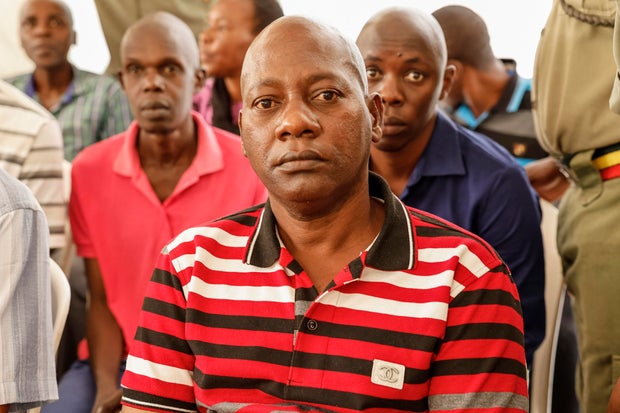
Paul Mackenzie, a former taxi driver in the early 2000s, transitioned into a religious leader after founding the Good News International Ministry. Operating out of Malindi and spreading his teachings online across Kenya, Mackenzie gathered thousands of followers through fiery sermons. Investigators noted that Mackenzie built a history of religious extremism and managed to evade long-term law enforcement detention despite multiple prior arrests. During court appearances at Mombasa Law Courts, Mackenzie appeared impassive alongside 29 co-accused associates, who were transported to the court in a barred-window bus while handcuffed in pairs.
Victim Information
The murder convictions stem specifically from the deaths of 191 victims, comprising 190 children and one adult. Broader excavation efforts across the Shakahola Forest complex have unearthed more than 400 bodies of men, women, and children, with the Kenya National Commission on Human Rights placing the total death toll at 429 in 2024. Among the victims identified by family members were eight relatives of Francis Wanje, 62, who lost his daughter and two grandchildren. Numerous victims remain unidentified due to the advanced state of decomposition upon exhumation.
Police Response
Law enforcement authorities launched an extensive recovery and rescue operation in April 2023 after receiving actionable intelligence from a local human rights group. Responding officers secured the remote 800-acre ranch in Shakahola Forest, rescued several surviving cult members who were actively undergoing forced starvation, and initiated systematic site searches. The scale of the disaster overwhelmed local infrastructure, forcing authorities to temporarily suspend exhumation operations when local mortuaries ran out of storage space.
Investigation
The multi-agency investigation involved state pathologists, forensic crime scene investigators, and homicide detectives who systematically mapped and excavated dozens of shallow graves across the Shakahola Forest property. Pathologists conducted exhaustive postmortem assessments to determine causes of death, identifying combinations of severe starvation, blunt force trauma, and mechanical asphyxiation. Investigators tracked Mackenzie's communications, physical locations, and financial activities, determining that he had created a rigid hierarchy of death to manage the mass starvation process.
Evidence Collected
- Forensic autopsy reports detailing causes of death including starvation, neck compression, traumatic head injury, and asphyxiation.
- Physical evidence recovered from shallow mass graves spanning an 800-acre ranch in Shakahola Forest.
- Statements and testimonies provided by surviving cult members rescued from the site during police raids.
- Documentation of prior law enforcement interactions, including records of arrests in 2017 and 2019.
- Testimonial evidence regarding Mackenzie's sermons, digital media broadcasts, and small-group organizational structure.
Arrest Details
Paul Mackenzie was arrested in April 2023 at his property in Shakahola Forest after police intervention tipped off by a human rights organization. Following his initial apprehension, he was held in custody as prosecutors built complex criminal cases involving multiple jurisdictions and hundreds of counts of murder, manslaughter, and terrorism-related offenses.
Charges Filed
In criminal legal procedure, charges represent formal allegations brought by the state based on evidence gathered during an investigation. The legal breakdown of charges associated with this case includes:
- Murder: Under criminal law, murder is the unlawful killing of a human being committed with malice aforethought or intentional premeditation. In this proceeding, the court delivered guilty verdicts on 191 counts of murder. Convictions for murder carry severe penalties, including life imprisonment or capital punishment depending on jurisdictional statutory frameworks.
- Manslaughter: Manslaughter involves the unlawful killing of a human being without premeditation or legal malice. It may involve voluntary acts committed under provocation or involuntary acts resulting from criminal negligence or reckless disregard for human life. Separate charges of manslaughter remain part of the broader legal proceedings against Mackenzie.
- Terrorism: Terrorism charges encompass acts intended to intimidate a population, coerce a government, or systematically cause severe public harm or loss of life through organized ideological violence. Statutory penalties for terrorism convictions often involve lengthy prison terms up to life imprisonment.
Court Information
The ruling was delivered at the Mombasa Law Courts in Mombasa, Kenya. The trial involved 30 co-defendants, culminating in the conviction of Paul Mackenzie and 28 associates on 191 murder counts. Proceedings were observed by relatives of victims and international media representatives. Additional legal proceedings regarding separate indictments for manslaughter and terrorism remain active within the judicial system.
Statements from Authorities
Delivering the verdict, the presiding judge stated, "I am satisfied that the prosecution has proved the case against all the 29 accused persons for the murder of 190 children and one adult." Relatives attending the court session also spoke regarding the verdict, with Francis Wanje stating, "This day, to me, is a very, very important day. We are expecting a ruling that will be a lesson to the whole public, so that such kinds of things will not happen again." Defense attorneys for Mackenzie argued during the trial that the state's case was "largely founded on circumstantial evidence, hearsay accounts and inconclusive forensic findings."
Public Safety Information
Public safety agencies emphasize that individuals who suspect a loved one is being subjected to unlawful coercion, isolation, or dangerous cult activities should report their concerns immediately to local law enforcement or human rights monitoring groups. For individuals experiencing severe emotional distress, domestic crisis, or thoughts of self-harm, confidential help is available 24/7 through national support resources. In the United States, individuals can contact the Suicide & Crisis Lifeline by calling or texting 988, or reach emergency services directly by dialing 911.
What Happens Next
Following a judgment of guilt in a major criminal trial, the judicial process moves into the sentencing phase. During this period, the court considers aggravating and mitigating factors, victim impact statements, and presentence evaluation reports to determine appropriate penalties under statutory law. The defense retains the right to file post-trial motions or lodge formal appeals with higher appellate courts to challenge evidentiary rulings, legal interpretations, or conviction findings. Meanwhile, defendants convicted of major felony offenses remain remanded in custody.