Case Summary
- Case Type
- Assault
- Location
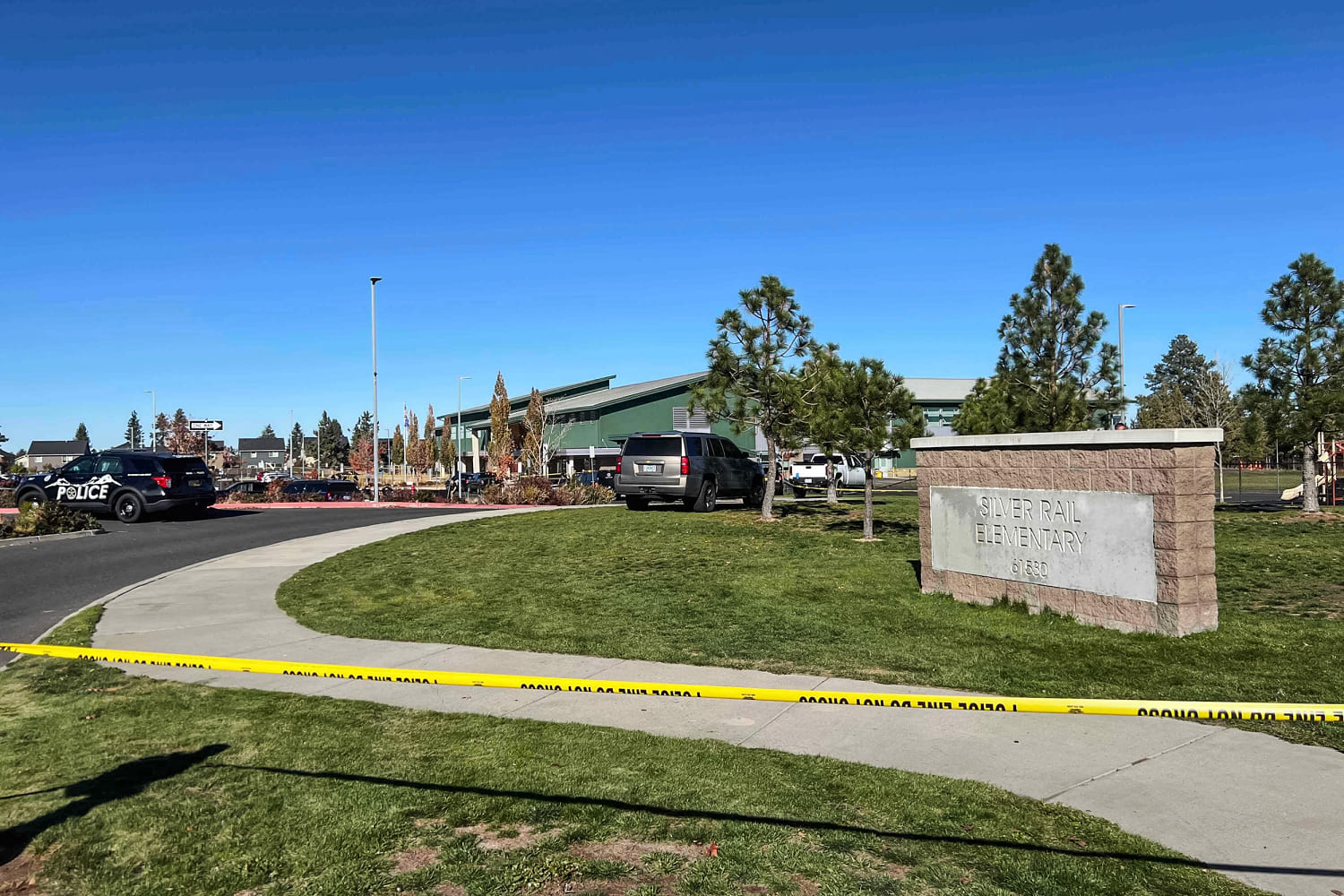
- Silver Rail Elementary School, Bend, Oregon
- Investigating Agency
- WSVN Miami
An elementary school teacher who survived a recent shooting in Bend, Oregon, has issued a public statement clarifying that she was shot before having an opportunity to protect students, correcting earlier accounts that described her shielding a child.
Becky Drury, an educator at Silver Rail Elementary School in Bend, released the statement to address previous reports regarding her actions during the classroom gunfire, noting that while she attempted to secure the door, she was struck immediately upon seeing the shooter.
Incident Overview
According to reports from television station WSVN, the shooting occurred at Silver Rail Elementary School in Bend. Initial narratives surrounding the incident suggested that Drury actively placed herself between an armed assailant and a young pupil to prevent further injury. Drury specifically addressed those early descriptions in her written message, setting the record straight about the sequence of events as they unfolded in the school building.
Drury stated that after catching sight of the shooter, her immediate reaction was to move toward the classroom entrance to shut the door. However, the gunfire occurred so rapidly that she was struck prior to securing the barrier. Drury wrote directly: "The truth is I was shot before I had any chance to act." Drury explained that although she intended to lock out the danger, she was disabled by the gunfire before she could complete the physical action of closing the entrance.
Victim Information
Becky Drury was wounded in the shooting while present inside the elementary school facility. Early media accounts indicated that Drury had shielded a 7-year-old student who was present in the room when the gunfire started. While Drury confirmed that she was injured on site, her clarifying statement specified that she was hit by gunfire before she could successfully shield the young student or fully close the door against the intruder.
Charges Filed
Specific formal charges relating to the shooting at Silver Rail Elementary School have not been itemized in public updates provided by regional broadcasters. In the state of Oregon, violent incidents involving the discharge of firearms on school grounds generally implicate several serious statutory categories under state penal law, depending on the status and intent of the alleged perpetrator.
Under Oregon law, acts involving the intentional or knowing infliction of serious physical injury with a deadly weapon typically qualify as assault in the first degree, an Oregon Class A felony. A conviction on a Class A felony in Oregon carries a maximum sentence of up to 20 years in prison and substantial criminal fines under state sentencing guidelines. When an individual attempts to cause death or causes intentional harm, prosecutors may also examine attempted murder charges, which similarly constitute Class A felony offenses subjected to mandatory minimum terms under Oregon statutory rules.
Additionally, the unlawful possession or discharge of a firearm within a public building or school facility constitutes an independent felony offense under Oregon Revised Statutes. Unlawful use of a weapon is categorized as a Class C felony, which can result in penalties of up to five years of incarceration. Endangering the welfare of minors, reckless endangerment, and multiple counts of attempted assault are often brought on an individualized basis corresponding to each person within the zone of danger created during a shooting incident.
Court Information
Public records and court dockets for proceedings connected to the incident in Bend fall under the jurisdiction of the Oregon Judicial Department, specifically the Deschutes County Circuit Court. Official court case numbers and scheduled hearing dates have not been detailed in initial television news accounts.
In Oregon criminal procedure, an initial court appearance following an arrest requires an arraignment before a circuit court judge. During an arraignment, the defendant is formally informed of the charges filed by the district attorney, advised of constitutional rights, and assigned legal counsel if indigent. The court also addresses pretrial custody conditions, including whether bail is permissible or if preventative detention is warranted based on public safety assessments. If a grand jury returns a formal indictment, the case subsequently advances to pretrial motion hearings, settlement conferences, and potential trial scheduling before a jury of local peers.
Statements from Authorities
Law enforcement statements identifying specific investigative findings were not detailed in the WSVN report. The primary statement on the incident record came directly from Drury herself, who released a written explanation to clarify the historical record surrounding her actions during the school assault.
In her statement, Drury explained: "The truth is I was shot before I had any chance to act." Drury described her immediate effort to protect the room, stating she saw the shooter and tried to close the classroom door, but could not do it in time.
Public Safety Information
School safety protocols and emergency responses to active violence remain an ongoing focus for educational institutions and community emergency services. Local authorities remind residents, parents, and students to report any direct threats of violence, suspicious behavior, or safety concerns immediately to local emergency dispatchers by dialing 911. For those seeking anonymous channels to report potential school threats, state and national prevention hotlines offer continuous intake, and individuals in emotional crisis or trauma following violent incidents may call or text the national 988 Suicide and Crisis Lifeline for confidential support.
What Happens Next
Following critical violent incidents, local law enforcement agencies coordinate closely with county prosecutors to review physical evidence, evaluate witness and victim statements, and formalize any applicable charging instruments. If charges are advanced, the accused will proceed through standard procedural checkpoints, including formal grand jury review, plea entry, discovery exchanges, and evidentiary motion hearings, prior to reaching any plea disposition or court trial in the appropriate circuit venue.