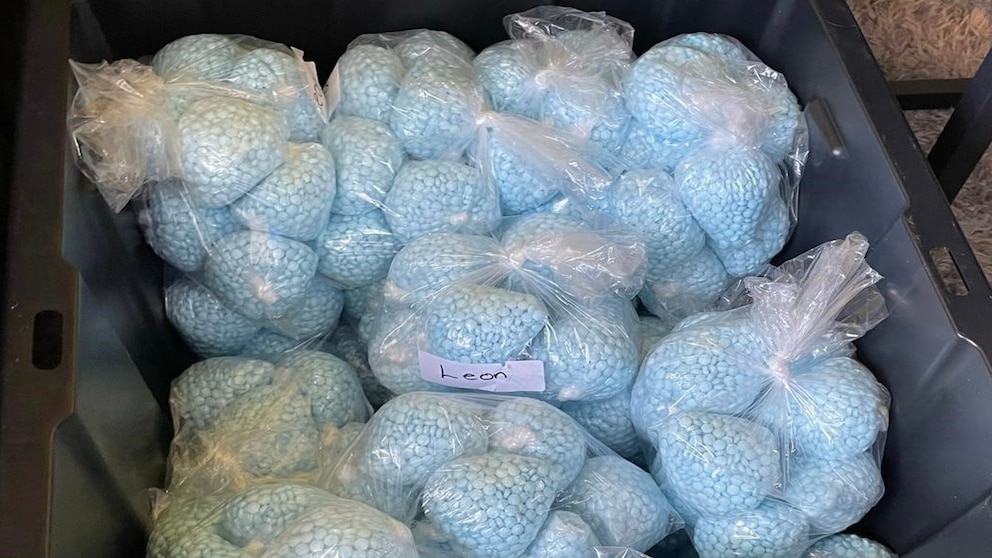
- WHO: New Mexico Governor Michelle Lujan Grisham called for a criminal investigation into the DEA.
- WHAT: The governor alleges the DEA allowed hundreds of thousands of fentanyl pills to reach the streets.
- WHERE: The alleged incidents occurred in New Mexico.
- WHEN: The alleged incidents took place over a two-year period, from 2023 to 2025.
- STATUS: The governor has requested the state’s attorney general examine whether state law was violated.
New Mexico Governor Michelle Lujan Grisham has called for a criminal investigation into the Drug Enforcement Administration (DEA) for allegedly allowing hundreds of thousands of fentanyl pills to reach the streets of New Mexico over a two-year period.
Governor Lujan Grisham’s request, made to the state’s attorney general, seeks to determine if the federal agency's actions violated New Mexico state law. This action follows an Associated Press investigation that detailed the DEA's strategy in the state.
What Happened
According to an Associated Press investigation, between 2023 and 2025, DEA agents in New Mexico reportedly allowed substantial fentanyl shipments to continue their movement through the state. This approach was implemented as agents worked to build cases against higher-ranking traffickers, rather than seizing the drugs immediately, the investigation found. Governor Lujan Grisham described these decisions as "reckless and dangerous," stating that the DEA was aware of the potential for fatalities if the pills entered New Mexico communities.
Current and former DEA agents reportedly told the Associated Press that this strategy posed risks to public safety in a state significantly affected by the fentanyl epidemic. The strategy may also have violated U.S. Justice Department guidelines designed to protect the public from fentanyl. An internal report from 2023, cited in the AP investigation, detailed a delivery of 74,000 pills that the DEA surveilled but did not seize at a mobile home park in Albuquerque.
A DEA spokesperson, Amanda Wozniak, stated that “the investigative decisions at issue were lawful, reasonable under the circumstances and consistent with Department guidance.” Former U.S. Attorney for New Mexico, Alex Uballez, who served from May 2022 until February 2025, indicated that drugs sometimes went unseized due to limited resources in his office and a belief that prosecuting larger organizations would have a greater impact than intercepting every suspected drug transaction. New Mexico recorded a 21% increase in overdose deaths last year, according to government data.
The Charges Explained
While specific charges have not been itemized, Governor Lujan Grisham's request for a criminal investigation suggests a focus on potential violations of New Mexico state law related to drug trafficking or negligence. Drug trafficking typically involves the illegal manufacture, distribution, or sale of controlled substances. Depending on the specifics of the alleged conduct and state statutes, potential charges could range from contributing to the delinquency or distribution of controlled substances to other related offenses, should a criminal probe determine culpability.
How These Cases Move Through Court
In New Mexico, criminal cases typically begin with an investigation by law enforcement, followed by the filing of charges. For state-level offenses, as is being explored in this current situation, the process generally starts with an arrest or the issuance of a summons. An arraignment then takes place, where the accused is formally informed of the charges and enters a plea. For serious offenses, a grand jury indictment may be sought, or a preliminary hearing may be held to determine if there is sufficient evidence to proceed to trial. Many cases are resolved through plea bargains, while others proceed to a jury trial or, in some instances, a bench trial before a judge. If convicted, sentencing occurs based on state law and aggravating or mitigating factors.
Context & Background
The governor's call for an investigation comes amid a national struggle with the fentanyl epidemic. Fentanyl, a synthetic opioid that is 50 to 100 times more potent than morphine, has been designated by the White House as a "weapon of mass destruction" due to its deadly impact. While national overdose deaths reportedly fell by 14% last year, New Mexico experienced a 21% increase in overdose fatalities, highlighting the state's particular vulnerability to the crisis. The debate over the DEA's tactics in New Mexico underscores the complex challenges law enforcement faces in combating drug trafficking while also protecting public safety.
Recognizing and Reporting Drug Trafficking
Recognizing the signs of drug trafficking can play a role in community safety. These signs may include unusual or frequent traffic at a residence, individuals appearing to be under the influence, or the presence of drug paraphernalia. If you suspect drug trafficking activity, it is important to report it to authorities. Non-emergency tips can be provided to local law enforcement. For emergencies, dial 911. You can also report suspicious activity to the FBI at 1-800-CALL-FBI (1-800-225-5324).
What Happens Next
The immediate next step will involve the New Mexico Attorney General's office reviewing Governor Lujan Grisham's request to determine if a formal criminal investigation into the DEA's actions under state law is warranted. The timeline for such a review and any subsequent legal action is not publicly known.