Case Summary
- Case Type
- Sex Crimes
- Incident Date
- February 13, 2017
- Location
- Hiking trail outside Delphi near abandoned railroad trestle, Delphi, Indiana
- Investigating Agency
- ABC7 New York
- Suspect
- Richard Allen
- Victim Count
- 2
- Charges
- murder
- Arrest Status
- Arrested
- Court Status
- Under Appeal
- Case Status
- Convicted
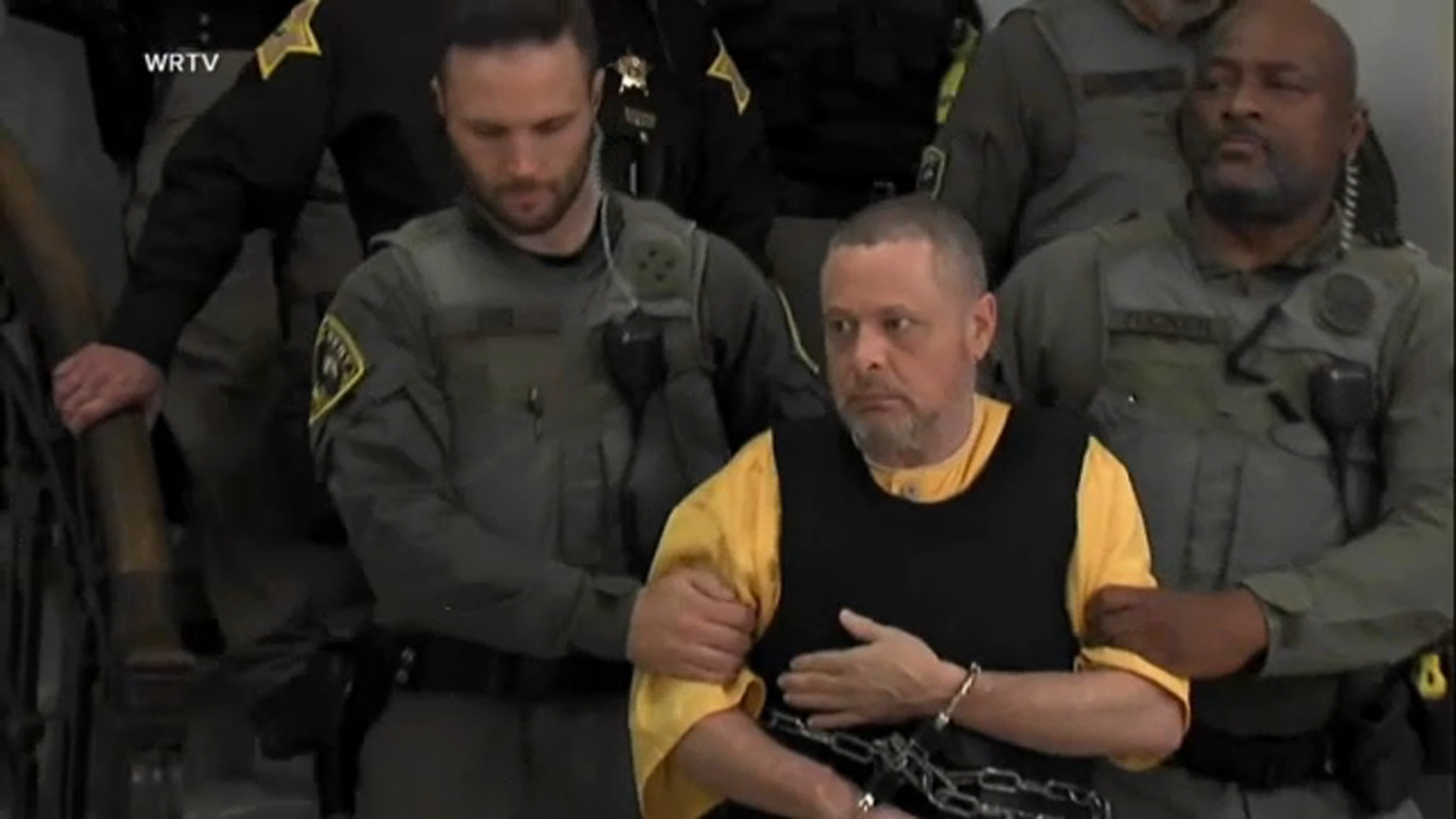
DELPHI, Ind. - Convicted murderer Richard Allen is seeking a new trial before the Indiana Court of Appeals following his 2024 conviction in the February 2017 killings of 13 year old Abigail Williams and 14 year old Liberty German in Delphi, Indiana.
Allen, who was sentenced to serve 130 years in state prison, claims through defense counsel that his incriminating statements were coerced during a severe psychological breakdown while held in solitary confinement. The defense further asserts that the trial court erred by barring expert testimony regarding alleged pagan ritual evidence.
Incident Overview
The victims, eighth grade students Abigail Williams and Liberty German, were dropped off to walk along a hiking trail near an abandoned railroad trestle outside Delphi on Feb. 13, 2017. When the teens failed to meet their designated pickup point, a search began. Their bodies were discovered the following day down a steep hill near the trail. Both victims sustained severe knife wounds to their throats. One victim was discovered unclothed, while the other was dressed in the first victim's clothing. Authorities found no physical evidence indicating sexual assault had occurred.
According to prosecutors, Allen confronted the girls on the trail while armed with a firearm, ordering them off the trail after Liberty German captured brief video and audio of a man instructing them to go "Down the hill." Prosecutors alleged Allen intended to assault the teens before altering his plan and killing them.
Timeline of Events
- Feb. 13, 2017: Abigail Williams and Liberty German are reported missing after being dropped off at a hiking trail near Delphi, Indiana.
- Feb. 14, 2017: Search teams locate the bodies of both victims down a steep hill near an abandoned railroad trestle.
- October 2022: Richard Allen is arrested and taken into custody following a five year investigation.
- 2024: Allen is convicted of murder at trial and sentenced to serve 130 years in state prison.
- Present: The Indiana Court of Appeals hears oral arguments to evaluate Allen's petition for a new trial.
Suspect Information
Richard Allen was arrested in connection with the Delphi homicides following a five year police investigation. Prior to his trial, Allen was held in solitary confinement, during which defense counsel reported he experienced severe psychological deterioration. Defense filings state that Allen suffered severe physical decline, lost 40 pounds, was tased, sustained facial injuries including black eyes and bleeding, and suffered exposure to toilet water and fecal matter while incarcerated.
Victim Information
The victims were 13 year old Abigail Williams and 14 year old Liberty German, known locally as Abby and Libby. Both girls were eighth grade students in Delphi, Indiana, who went missing while spending an afternoon walking along public hiking trails near the Monon High Bridge area.
Police Response
Law enforcement agencies initiated search efforts immediately after the teenagers failed to return to their pickup point on Feb. 13, 2017. Responding search parties and investigative personnel located the crime scene the following day. State and local police conducted an exhaustive multi-year investigation before identifying and arresting Allen in connection with the homicides.
Investigation
Investigators analyzed digital evidence extracted from Liberty German's cellphone, which contained video footage of a male suspect on the trail uttering the phrase "Down the hill." Crime scene investigators recovered an unspent bullet lying between the victims' bodies. Prosecution experts asserted at trial that micro-scratches on the unfired round indicated it had been cycled through Allen's personal handgun. Defense attorneys challenged the reliability of the firearm analysis and emphasized that no DNA, fingerprints, or physical forensic evidence linked Allen directly to the murder location.
Evidence Collected
- Cellphone video and audio recording from Liberty German's phone showing a suspicious man and capturing the phrase "Down the hill."
- An unfired cartridge recovered by crime scene investigators between the bodies of the two victims.
- Multiple recorded confessions made by Richard Allen while held in pre-trial detention.
Arrest Details
Richard Allen was taken into custody more than five years after the homicides occurred. Following his arrest, Allen was detained in solitary confinement pending trial, during which state prosecutors alleged he made repeated self-incriminating admissions to staff, family, and law enforcement officials.
Charges Filed
- Murder: Richard Allen was charged and convicted on two counts of murder under Indiana law. Under state criminal codes, murder involves knowingly or intentionally killing another individual. In Indiana, a murder conviction carries a statutory prison term ranging between 45 and 65 years per count, with potential enhancements up to life imprisonment without parole or the death penalty depending on aggravating circumstances. Allen was sentenced to consecutive terms totaling 130 years in state custody.
Court Information
The appeal is currently before the Indiana Court of Appeals for one hour of oral arguments. The defense team is represented by attorneys Stacy Uliana and Mark Leeman. The State of Indiana is represented by the Office of Attorney General Todd Rokita. The underlying criminal trial concluded in 2024 with a conviction and a 130 year prison sentence.
Statements from Authorities
Defense attorneys Stacy Uliana and Mark Leeman described Allen's pre-trial confinement conditions in their appellate brief, writing: "Allen lost forty pounds, was unable to care for himself, was tased, his face was black and blue and at times bleeding, and he was poisoned by fecal matter and toilet water."
In response, Indiana Attorney General Todd Rokita defended the conviction in the state's filing, writing: "The discovery materials forced Allen to face the horrifying evidence of what he did ... images and events he had been able to ignore and repress over the five years in which his guilt had gone undiscovered."
Public Safety Information
Members of the public who observe suspicious activity or have information regarding unsolved crimes are encouraged to contact their local police department or call 911 in emergencies. Information regarding violent crimes can also be reported to national authorities through the Federal Bureau of Investigation by calling 1-800-CALL-FBI.
What Happens Next
The Indiana Court of Appeals will consider oral arguments regarding whether the trial judge improperly excluded defense expert testimony on potential pagan ritual involvement, whether Allen's confessions were involuntary, and whether firearm identification testimony was properly admitted. Following oral arguments, the appellate court will issue a written opinion determining whether to affirm the conviction, order a new trial, or remand the case for further proceedings.