Case Summary
- Case Type
- Official Misconduct / Fraud
- Location
- Lauderhill, FL, Lauderhill, FL
- Investigating Agency
- Lauderhill Police Department
- Suspect
- Brian Louis Sguros
- Suspect Age
- 35
- Charges
- Official Misconduct, Fraud
- Arrest Status
- Arrested
- Court Status
- Appeared in court
- Case Status
- Pending
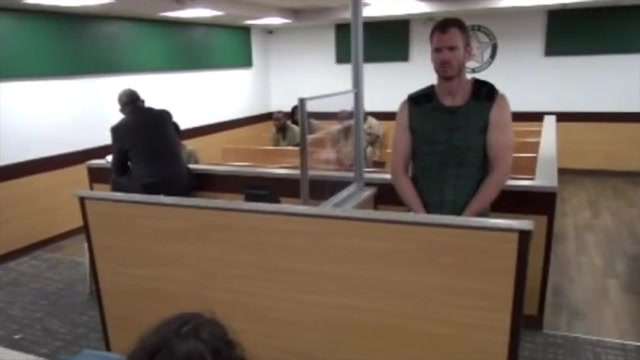
A Lauderhill Police Department officer appeared in shackles before a Broward County Circuit Court judge on Wednesday morning, one day after his arrest in connection with an alleged years-long fraud scheme involving a deceased man's residence.
The defendant, identified as 35-year-old Lauderhill Police officer Brian Louis Sguros, faces multiple criminal charges following an investigation into what authorities described as an illicit adverse possession scheme targeting a home in South Florida.
Incident Overview
Authorities allege that Brian Louis Sguros exploited a tragic situation to carry out an illegal real estate scheme over a period of several years. According to court proceedings and investigative findings reported by local media, Sguros took control of a deceased individual's home in Lauderhill, Florida, using unlawful means to occupy or claim authority over the property.
Investigators characterized the operation as a fraudulent adverse possession scheme. In general legal contexts, adverse possession refers to a statutory legal mechanism through which a person claims lawful title to real property by possessing it for a specified continuous period under strict legal conditions. However, when an individual uses fraudulent documentation, misrepresentation, or abuse of public office to take control of private property without authorization, law enforcement agencies and prosecutors investigate such conduct as criminal scheme fraud, trespass, or grand theft.
Suspect Information
Brian Louis Sguros is a 35-year-old officer employed by the Lauderhill Police Department in South Florida. Court records indicate that Sguros was taken into custody by law enforcement officers prior to his initial judicial appearance. Further details regarding his law enforcement service history, departmental duty status, employment record, or internal administrative proceedings were not immediately released by municipal officials.
Police Response
Following an internal or multi-agency investigation into the allegations surrounding the property, law enforcement personnel initiated formal arrest procedures against the officer. Responding officers executed the arrest on Tuesday, placing Sguros into custody without reported incident before transporting him to a Broward County detention facility for processing and intake ahead of his initial judicial hearing.
Investigation
The criminal investigation into Sguros was conducted after investigators uncovered evidence of an adverse possession scheme that allegedly spanned multiple years. Investigators examined property records, historical filings, and circumstances surrounding the death of the home's former owner to determine how the officer gained control of the residential address. The inquiry focused on whether public authority or law enforcement credentials were improperly utilized to facilitate the unlawful takeover of the real estate asset.
Arrest Details
Sguros was arrested on Tuesday and subsequently processed at the county jail. On Wednesday morning, one day after his arrest, he was escorted into court in shackles for his initial appearance before Broward County Circuit Court Judge Allison Gilman. The defendant remained in custody during the proceeding while attorneys presented agreed-upon pre-trial release terms to the presiding judicial officer.
Charges Filed
While specific statutory section numbers remain unitemized in initial reports, authorities confirmed that Sguros faces several criminal charges centered on official misconduct and fraudulent activity. In Florida jurisprudence, these statutory offenses carry significant legal definitions and potential penalties:
- Official Misconduct: Under Florida law, official misconduct occurs when a public servant, with corrupt intent to obtain a benefit for themselves or another or to cause harm to another, falsifies or causes another to falsify an official record, conceals or destroys an official record, or performs an act obstructing a governmental function. Official misconduct is typically classified as a third-degree felony in Florida, punishable upon conviction by up to five years in state prison, five years of probation, and statutory fines reaching up to $5,000 per count.
- Fraud and Fraudulent Schemes: Fraud charges in Florida encompass a broad spectrum of criminal behavior involving intentional deception intended to result in financial or personal gain. In real estate contexts, fraudulent practices often involve illegal property transfer documents, false claims of adverse possession, or unlawful occupation of real property belonging to another. Depending on the financial value of the property involved or the complexity of the scheme, criminal fraud and organized fraud can range from third-degree felonies to first-degree felonies. First-degree felonies under Florida law carry maximum penalties of up to 30 years in prison and substantial financial penalties.
Court Information
The initial legal proceedings for this case are taking place in the Circuit Court of the Seventeenth Judicial Circuit in and for Broward County, Florida. Presiding over the initial hearing on Wednesday morning was Broward County Circuit Court Judge Allison Gilman.
During the preliminary hearing, the court reviewed the financial conditions for pre-trial release. Defense counsel informed the court that a monetary bail agreement had been negotiated with prosecutors from the Broward County State Attorney Office. Judge Gilman considered the agreement, setting the total bond at $25,000. Under Florida criminal procedure, circuit courts maintain jurisdiction over all felony prosecutions, preliminary hearings, bond modifications, and formal trial proceedings.
Statements from Authorities
During the court session on Wednesday morning, defense counsel presented the bond agreement directly to the court. "I've spoken to the assistant state attorney. We do have an agreement with respect to the bond; it's going to be $25,000 total," Sguros' attorney stated before Judge Allison Gilman.
Public Safety Information
Property fraud, deed tampering, and unlawful adverse possession schemes pose serious financial and legal risks to property owners, heirs, and local communities. Law enforcement agencies and legal experts advise property owners, estate executors, and family members to take proactive steps to protect real estate assets, particularly after the death of a sole homeowner:
- Regularly check property records with the local county clerk of courts or property appraiser office to ensure no unauthorized deeds, liens, or claims of adverse possession have been filed against the property.
- Ensure that vacant or inherited properties are securely monitored, physically inspected, and properly maintained to prevent unauthorized entry or fraudulent occupation.
- Report any suspicious activity, unauthorized occupants, or forged property documents immediately to local law enforcement authorities or state prosecutors.
- If you suspect real estate fraud or public corruption, contact local law enforcement authorities, the state attorney office, or national law enforcement helplines such as 1-800-CALL-FBI (1-800-225-5324) or emergency services at 911.
What Happens Next
Following an initial court appearance and the establishment of pre-trial release conditions, a felony criminal case in Florida moves into formal pre-trial proceedings. The State Attorney Office will evaluate the preliminary charges to file a formal charging document, known as an information or indictment. If formal charges are presented, the defendant will be scheduled for a formal arraignment hearing, where an official plea of guilty, not guilty, or nolo contendere will be entered.
During the subsequent discovery phase, defense attorneys and prosecutors exchange evidentiary materials, police reports, witness statements, and forensic audit results. Pre-trial hearings, status conferences, and depositions will occur over the coming months to address legal motions, evidentiary admissibility, and potential plea negotiations. If no settlement or dismissal occurs, the case will ultimately proceed to a jury trial in Broward County Circuit Court, where the prosecution bears the burden of proving every element of the charges beyond a reasonable doubt.