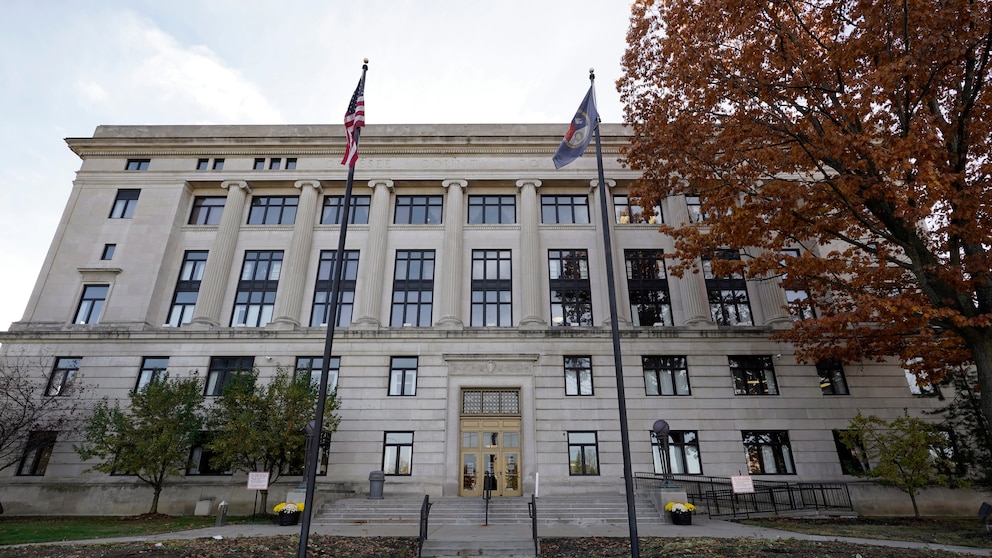
- WHO: Latoya Washington, 37, accused in the death of 4-year-old Curtis Washington.
- WHAT: Charged with involuntary homicide for allegedly failing to provide lifesaving seizure medication.
- WHERE: French Quarter Apartments on Basin Street in Southfield, MI.
- WHEN: Incident occurred on January 25, 2025; Washington was arraigned on Tuesday.
- STATUS: Washington granted $20,000 personal bond with GPS tether; next court appearance July 2.
A Michigan woman faces involuntary homicide charges in Southfield after authorities allege she failed to provide critical seizure medication to her 4-year-old son, leading to his death.
Latoya Washington, 37, was arrested following the death of her son, Curtis Washington, at the French Quarter Apartments on Basin Street in Southfield, an inner-ring suburb of Detroit. The incident, which led to the charges, occurred on January 25, 2025.
What Happened
On January 25, 2025, Southfield police responded to a report of an unresponsive child at the French Quarter Apartments. The 4-year-old boy was transported to a local hospital, where he was pronounced deceased, according to a press release from the Southfield Police Department, reported by The Oakland Press.
An investigation revealed that Curtis Washington had been hospitalized two days prior, after experiencing multiple seizures. Doctors stabilized the boy's condition during that visit and prescribed medication intended to prevent further seizures. Authorities stated that Latoya Washington subsequently took her son home against medical advice.
Police said that Curtis Washington experienced additional seizures on both January 24 and January 25. During these episodes, Washington allegedly did not administer the prescribed seizure-prevention medication or seek follow-up medical attention. Prosecutors, as reported by Detroit-based NBC affiliate WDIV, allege the boy's death resulted from a "grossly negligent failure to provide necessary medical care."
The Charges Explained
Latoya Washington stands accused of one count of involuntary homicide. Involuntary homicide, often referred to as involuntary manslaughter, generally involves an unintentional killing that results from recklessness or criminal negligence. It differs from murder in that there is no intent to kill. The charge typically requires proof that the defendant acted in a way that created a high risk of death or serious bodily harm, and that a reasonable person would have known of such risk, or that the defendant failed to perform a legal duty which resulted in death.
How These Cases Move Through Court
In Michigan, criminal cases typically begin with an arraignment, where the defendant is formally informed of the charges and a plea is entered. bail conditions are also set. The next step, as in this case, is often a probable cause conference, where the attorneys and judge discuss the case and attempt to resolve it without a trial. If an agreement is not reached, a preliminary examination may follow, where a judge determines if there is enough evidence to send the case to trial. If sufficient evidence is found, the case is bound over to a higher court, typically the circuit court, for further proceedings, potentially including an arraignment on information, pre-trial conferences, and ultimately a trial by jury or a plea agreement. If convicted, sentencing would follow.
Context & Background
Child neglect cases that result in fatalities underscore the critical responsibilities of caregivers, particularly when children have pre-existing medical conditions. According to Southfield Police Chief Elvin Barren, such incidents highlight the absolute dependence of vulnerable children on adults for their care and well-being. Effective parental and caregiver response to medical concerns, adherence to treatment plans, and prompt seeking of medical help for worsening conditions are vital in preventing tragic outcomes.
Recognizing and Reporting Homicide
Recognizing the signs of potential child neglect or abuse can be critical in preventing serious harm. If you suspect a child is in danger or experiencing medical neglect, it is important to report your concerns to appropriate authorities. For immediate emergencies, call 911. Concerns about child abuse or neglect can also be reported to Child Protective Services in your state. For information or resources regarding child welfare, you can contact the National Center for Missing and Exploited Children at 1-800-843-5678.
What Happens Next
Latoya Washington was granted a $20,000 personal bond, which includes GPS tether monitoring. She is scheduled to appear next in court on July 2 for a probable cause conference before 46th District Court Judge Cynthia Arvant. This conference will involve discussions between the prosecution and defense, potentially to negotiate a plea or set the course for future legal proceedings.