Case Summary
- Case Type
- Homicide
- Incident Date
- 1996
- Location
- West Miami-Dade, Florida, West Miami-Dade, FL
- Investigating Agency
- WSVN Miami
- Suspect
- Raúl Castro
- Suspect Age
- 95
- Victim Count
- 4
- Charges
- murder
- Arrest Status
- Warrant Issued
- Court Status
- Pending
- Case Status
- Open
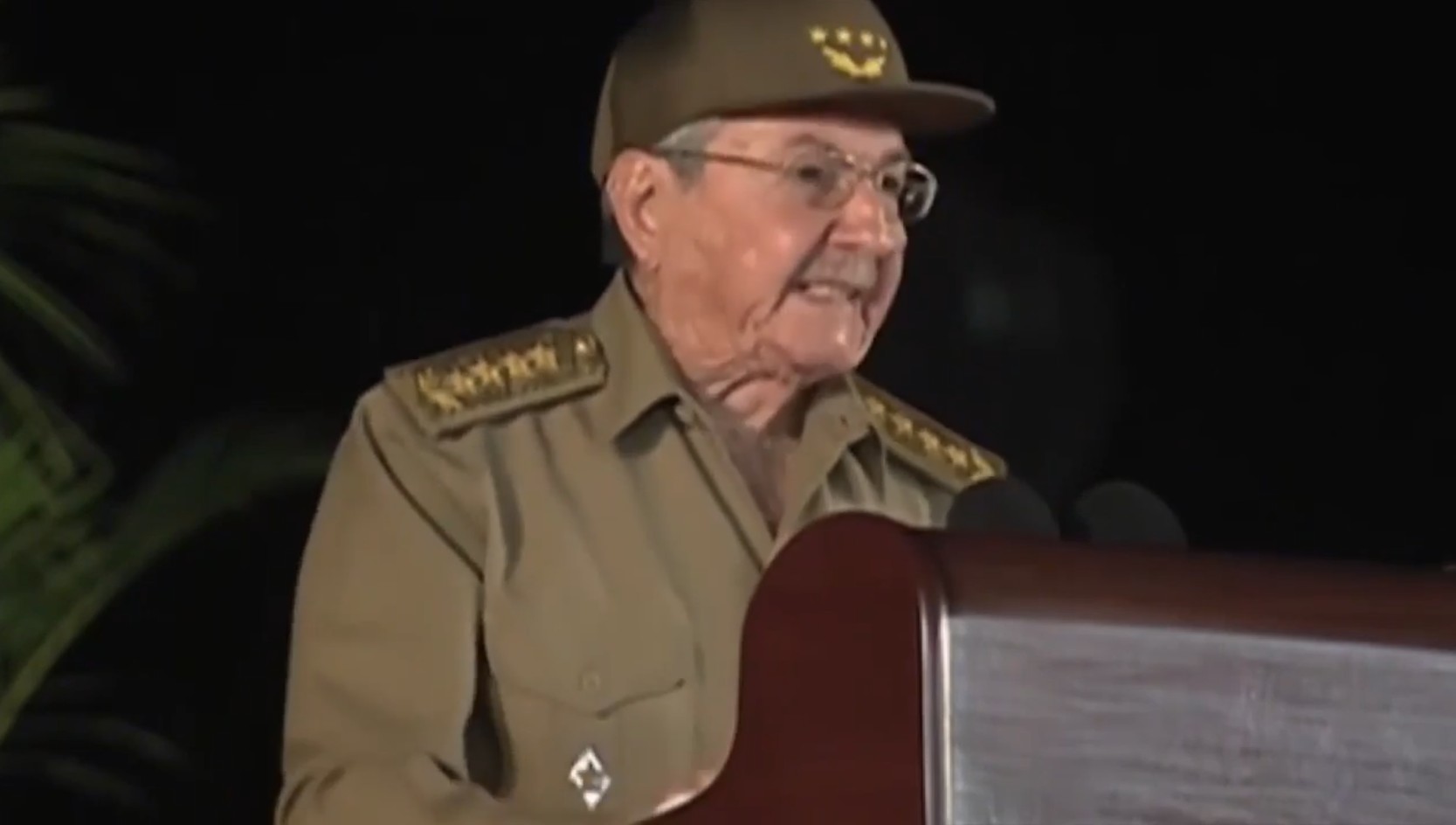
The State of Florida has issued an official state arrest warrant for former Cuban leader Raúl Castro in connection with the 1996 fatal shootdown of two Brothers to the Rescue aircraft, according to reporting from WSVN Miami.
The legal action targets the 95-year-old former dictator following previous federal murder charges announced by the United States Department of Justice. The state-level warrant addresses the historical incident in international waters that resulted in four fatalities during a civilian humanitarian patrol mission conducted three decades ago.
Incident Overview
The incident stems from the 1996 aerial attack on two civilian planes operated by the humanitarian organization Brothers to the Rescue. The victims were patrolling in international waters on a search and rescue mission aimed at locating individuals floating at sea when their aircraft were targeted and shot down by Cuban military forces acting under state authority.
Four individuals aboard the two civilian aircraft lost their lives as a result of the shootdown in international airspace. The event generated significant international condemnation and legal actions across multiple jurisdictions, culminating in state and federal criminal charges filed against senior figures associated with the Cuban regime.
Suspect Information
The subject of the Florida state arrest warrant is identified as follows:
- Name: Raúl Castro
- Age: 95 years old
- Background: Former leader of Cuba
- Legal Status: Subject of a Florida state arrest warrant and pending federal murder charges filed by the United States Department of Justice.
Victim Information
Four individuals were killed during the 1996 shootdown while flying a humanitarian patrol mission in international waters:
- Armando Alejandre Jr.
- Mario de la Peña
- Pablo Morales
- Carlos Costa
The victims were operating two civilian aircraft as part of Brothers to the Rescue, an organization dedicated to patrolling maritime areas to locate Cuban rafters and provide assistance to individuals in distress at sea.
Investigation
The formal criminal investigation into the aerial attack spans several decades and involves both federal and state authorities. In May, the United States Department of Justice publicly announced federal murder charges against Raúl Castro during an announcement at Miami's historic Freedom Tower. In addition to the federal prosecution, state law enforcement and prosecutorial authorities in Florida initiated state-level proceedings, resulting in the issuance of a state arrest warrant for murder.
Charges Filed
The specific state criminal charge associated with the warrant issued in Florida is outlined below:
- Murder: Under Florida law, murder is the unlawful killing of a human being. First-degree murder is typically defined as an unlawful killing committed with premeditated intent or during the commission of certain specified felony offenses. In Florida, capital or first-degree murder carries severe statutory penalties, including mandatory life imprisonment without the possibility of parole or the death penalty upon conviction. Second-degree murder involves an unlawful killing executed through a depraved mind regardless of human life, without premeditation, carrying maximum penalties of up to life imprisonment. In criminal proceedings involving state jurisdiction over acts resulting in death, prosecutors must establish unlawful intent, causality, and statutory jurisdiction.
Court Information
While state warrant details have been processed in Florida, specific judicial court division numbers, formal docket numbers, and calendar hearing dates have not been released publicly. The suspect also faces a federal indictment filed by the United States Department of Justice in the United States District Court for the Southern District of Florida in Miami, Florida. Because the accused remains outside the physical custody of United States law enforcement authorities, formal court arraignment dates and scheduling hearings remain pending extradition or custody status changes.
Statements from Authorities
According to reports from WSVN Miami, state authorities in Florida confirmed the formal issuance of the state arrest warrant against Raúl Castro for his involvement in the 1996 shootdown of the two Brothers to the Rescue aircraft. Furthermore, the United States Department of Justice previously confirmed federal murder charges brought against Castro during a public announcement held at the Freedom Tower in Miami.
Public Safety Information
Although this case involves historical events, state criminal warrants, and international legal matters rather than an active local emergency threat, members of the public with relevant information regarding international fugitive matters or federal criminal investigations may contact federal law enforcement. Information can be reported directly to the Federal Bureau of Investigation by calling 1-800-CALL-FBI (1-800-225-5324) or by submitting tips online through official government channels. For immediate emergencies occurring within local communities, residents should always dial 911.
What Happens Next
The issuance of a state arrest warrant creates an active, outstanding legal mandate for law enforcement officers to apprehend the subject upon entry into state jurisdiction or through international legal extradition mechanisms. In complex cases involving foreign political figures residing outside the United States, several formal legal procedural steps must occur before a trial can proceed in a Florida court.
First, law enforcement agencies must secure physical custody of the accused party through execution of the warrant, international law enforcement coordination, or formal diplomatic extradition processes under treaties established between sovereign nations. If an accused individual is taken into custody, they must be brought before a judicial officer for an initial appearance and formal arraignment, during which the court formally reads the charges, informs the defendant of constitutional rights, and makes preliminary determinations regarding pretrial detention or bail conditions.
Following arraignment, the prosecution and defense enter the pretrial phase. This phase encompasses formal discovery, wherein both parties exchange evidence, witness statements, forensic findings, and official documentation. Pretrial motions may be filed to address jurisdictional challenges, evidentiary admissibility, procedural rights, and statutory compliance. If the defense or prosecution raises threshold legal issues regarding international immunity, sovereign immunity, or territorial jurisdiction, judges must adjudicate these legal arguments prior to scheduling a jury trial.
If the case advances to trial, a jury is selected, and prosecutors must prove every element of the charge beyond a reasonable doubt. Alternatively, if physical custody cannot be secured due to diplomatic barriers, non-extradition policies, or the political status of the foreign national, the arrest warrant remains active indefinitely within state and national law enforcement databases, preventing lawful travel to participating jurisdictions without risk of apprehension.