Case Summary
- Case Type
- Missing Persons
- Incident Date
- Aug. 6, 2023
- Incident Time
- Early morning hours
- Location
- Anchorage apartment and storm drain, Anchorage, AK
- Investigating Agency
- Law & Crime
- Suspect
- Zarrius Hildabrand
- Suspect Age
- 24
- Victim Count
- 1
- Charges
- second-degree murder, tampering with physical evidence, first-degree murder
- Arrest Status
- Convicted and sentenced
- Court Status
- Sentenced to 59 years in prison
- Case Status
- Closed with conviction
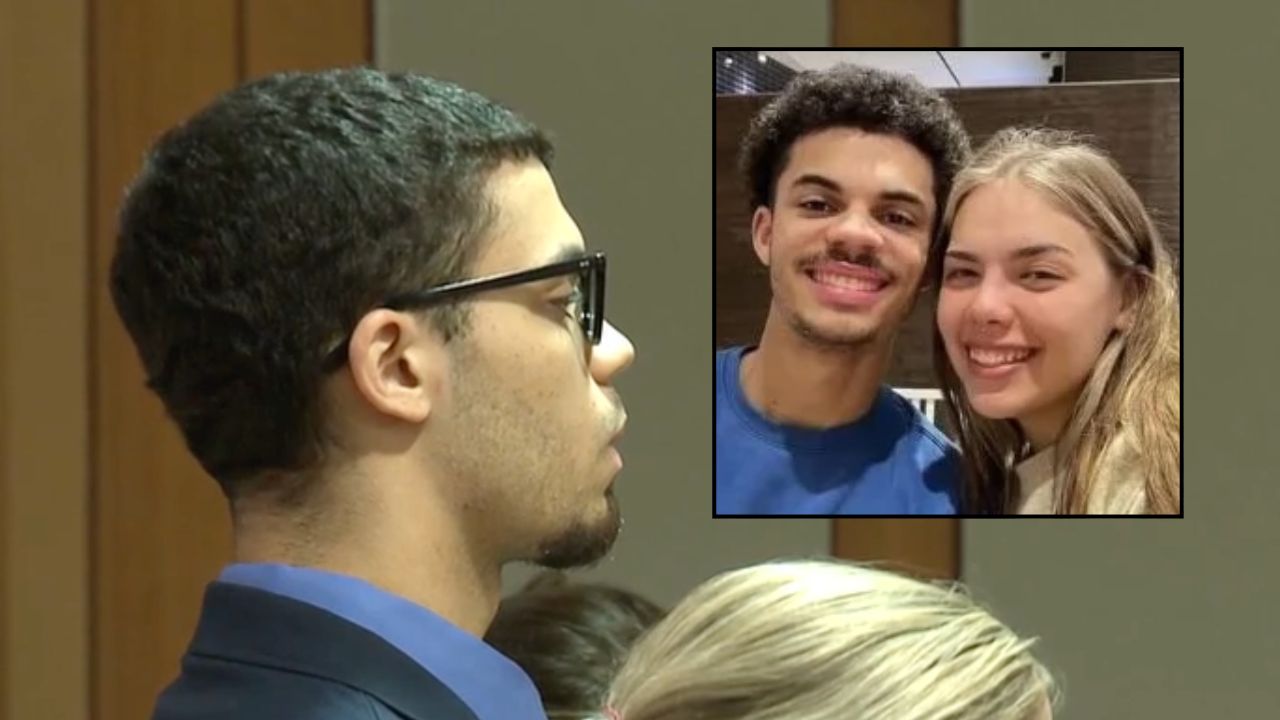
A former United States Army soldier from Alaska was sentenced to 59 years in prison following his conviction for fatally shooting his combat medic wife and hiding her body inside a local storm drain.
Zarrius Hildabrand, 24, learned his fate after being convicted of second-degree murder and tampering with physical evidence in connection with the death of his 21-year-old wife, Saria Hildabrand, whose remains were discovered in Anchorage in August 2023.
Incident Overview
The events unfolded in the early morning hours of August 6, 2023, following a birthday celebration for Zarrius Hildabrand. The couple, both on active duty with the U.S. Army at the time, had spent the evening visiting various establishments in Anchorage with friends before returning to their apartment. According to prosecutors from the Anchorage District Attorney's Office and the Alaska Department of Law, Saria Hildabrand discovered text messages on her husband's phone indicating he had been unfaithful. Evidence presented at trial established that Zarrius Hildabrand shot his wife once in the head with a 9 mm handgun inside their residence.
Following the shooting, Zarrius Hildabrand undertook extensive efforts to conceal the crime. Court documents and trial evidence showed he purchased a 96-gallon rolling trash can from a local home improvement store, transported his wife's body to a nearby park, and dumped her remains into a storm drain. He then initiated a false narrative, reporting her missing to law enforcement and participating in search efforts with volunteers while investigators later uncovered blood-saturated mattresses, cleaned bathroom surfaces, and other evidence pointing to a staged crime scene and an attempted cover-up.
Timeline of Events
- August 5, 2023: Zarrius and Saria Hildabrand celebrate his 21st birthday with friends at a downtown Anchorage bar.
- August 6, 2023 at approximately 2:00 a.m.: The couple returns home, where Saria discovers evidence of infidelity on her husband's phone, followed shortly thereafter by the fatal shooting.
- August 6, 2023 at 2:45 a.m.: A nearby witness hears a sound consistent with a gunshot, though an initial police response yields no immediate suspicious findings.
- August 6, 2023 later in the day: Zarrius Hildabrand purchases cleaning supplies, a mattress cover, a set of sheets, and a 96-gallon rolling trash can.
- August 7, 2023: A text message is sent from Saria's phone to her workplace canceling her shift, despite her phone remaining inside the apartment.
- August 8, 2023: Zarrius Hildabrand files an official missing person report after a delayed 36-hour window, prompting police interviews and subsequent searches.
- August 2023 (Later in the investigation): Law enforcement discovers blood evidence via search warrants, finds the rolling trash can, and deploys a drone to locate Saria Hildabrand's body in a storm drain.
- June 2026: Zarrius Hildabrand is convicted at trial and subsequently sentenced to 59 years in prison.
Suspect Information
Zarrius Hildabrand is a 24-year-old former U.S. Army soldier who was stationed in Alaska and served on active duty alongside his wife at the time of the offense. Following a jury trial, he was convicted of second-degree murder and tampering with physical evidence, while being acquitted of a first-degree murder charge. He was sentenced to 59 years in prison.
Victim Information
Saria Hildabrand was a 21-year-old active-duty U.S. Army combat medic who also worked at Bread and Brew, a local establishment located about a mile from the couple's apartment. She was described as a newlywed wife who was discovered deceased in a storm drain after being reported missing by her husband.
Police Response
Law enforcement officers and investigators responded to initial missing person reports and subsequently conducted welfare and search operations at the couple's Anchorage apartment. Upon interviewing the suspect and executing search warrants, officers utilized specialized blood-detection agents, recovered firearms, and deployed drones to trace the path of the rolling trash can used in the disposal of the victim.
Investigation
The multi-agency investigation involved local police detectives, crime scene technicians, the Anchorage District Attorney's Office, and the Alaska Department of Law. Investigators pieced together witness statements, store purchase records for cleaning items and large receptacles, digital device data regarding outgoing text messages, and extensive forensic blood analysis from the apartment's mattress frame, flooring, and bathroom.
Evidence Collected
- A 96-gallon rolling trash can purchased from Lowe's containing blood evidence
- A black and red mop bucket and matching mop matching store inventory
- Two 9 mm handguns recovered from the apartment, one missing a bullet from the magazine
- Forensic blood spatter and saturation discovered on the mattress, carpet, wood frame, and bathtub
- Receipts and purchases including marinara sauce, new sheets, a mattress cover, hydrogen peroxide, and an empty spray bottle
- Saria Hildabrand's cellular device left at the apartment from which a false call-out text was sent
- Surveillance and drone tracking data establishing the trail to the storm drain
Arrest Details
Zarrius Hildabrand was arrested following an extensive police investigation that began after he filed a missing person report approximately 36 hours after his wife's disappearance. He remained the primary focus of the inquiry as detectives uncovered physical evidence linking him to the homicide and the concealment of the body.
Charges Filed
- Second-Degree Murder: An unlawful killing committed with intent to cause serious physical injury or under circumstances manifesting extreme indifference to the value of life, carrying significant decades-long prison penalties under Alaska law.
- Tampering with Physical Evidence: The intentional alteration, destruction, or concealment of evidence with the intent to impair its verity or availability in an official proceeding, charged in relation to the cleanup of the apartment and disposal of the victim's body.
- First-Degree Murder (Acquitted): A charge alleging premeditated, intentional killing, of which the defendant was found not guilty by the jury.
Court Information
Judicial proceedings took place within the Alaska court system, culminating in a jury trial and sentencing in June 2026. The case was prosecuted through the Anchorage District Attorney's Office and the Alaska Department of Law, resulting in a 59-year prison sentence.
Statements from Authorities
According to prosecutors from the Anchorage District Attorney's Office and the Alaska Department of Law, the fatal encounter occurred in the early hours following the couple's return from birthday celebrations. Prosecutors stated that the defendant utilized a large rolling trash can to transport the victim's body to a nearby park after attempting to clean the crime scene and reporting her missing to law enforcement and family members.
Public Safety Information
Domestic violence and interpersonal conflicts can escalate rapidly to severe violence. Community members experiencing relationship distress, threats, or danger are encouraged to seek help immediately. Confidential support and resources are available nationwide. If you or someone you know is affected by domestic violence, contact the National Domestic Violence Hotline at 1-800-799-7233 or text START to 88788. For immediate emergencies, always dial 911.
What Happens Next
Following sentencing in criminal cases, the convicted individual enters the custody of the state department of corrections to begin serving the mandated prison term. Defendants retain standard appellate rights to challenge convictions or sentences through higher state or federal appellate courts, while prosecutors and victims transition into the post-sentencing phase of the judicial system.